Total and Permanent Disability (TPD) insurance provides a lump sum if you can no longer work. But the definition of "work" is the single biggest factor in whether a claim is paid.
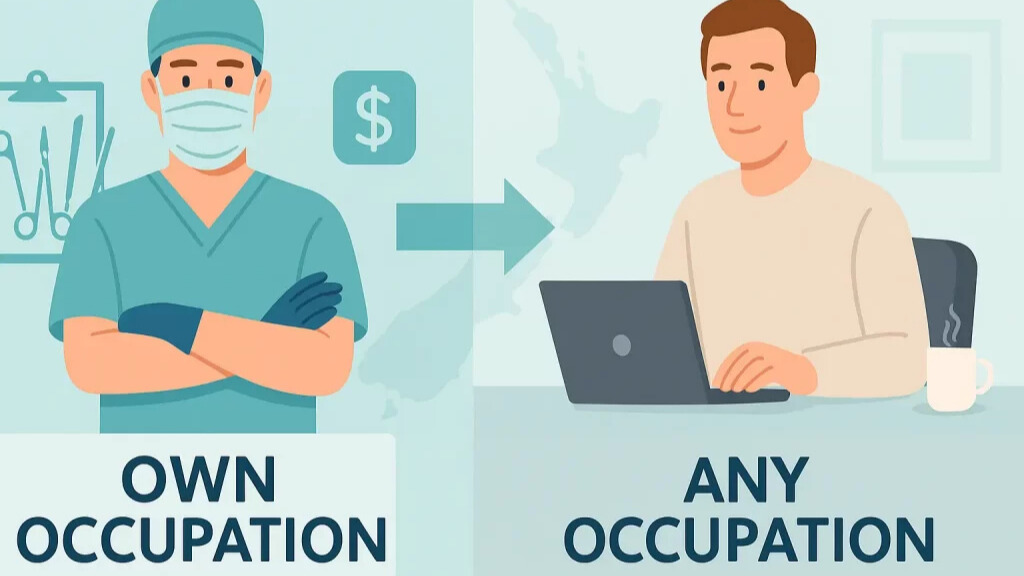
The difference comes down to one word: Own vs. Any.
1. The Definitions
- Any Occupation: You are considered disabled if you are unlikely to ever work again in any job for which you are reasonably suited by education, training, or experience.
- Own Occupation: You are considered disabled if you are unlikely to ever work again in your specific job (the one you held before the injury/illness).
2. The "Surgeon" Example
The easiest way to understand the risk is the classic surgeon example: Imagine a surgeon suffers a hand injury and can no longer perform surgery.
- Under "Own Occupation": They cannot perform their specific role. The policy pays the full lump sum.
- Under "Any Occupation": The insurer may argue that because of their medical degree, they are still "suited by education" to work as a General Practitioner or a medical lecturer. The claim could be declined, even though their career as a surgeon is over.
3. Superannuation vs. Self-Held
Due to legislation (the SIS Act), TPD insurance held inside superannuation is almost always Any Occupation. To get the stronger Own Occupation protection, you typically need to hold the policy (or a portion of it) outside of super.
4. Pricing and Suitability
- Own Occupation is more expensive because it is easier to claim. It is essential for specialized professionals (dentists, engineers, tradespeople) where a specific injury could end a career but not working life entirely.
- Any Occupation is cheaper. It is often suitable for general administrative roles or those where budget is the primary constraint.
The Verdict
If your ability to earn an income relies on a specific set of skills (like manual dexterity or specialized knowledge), "Any Occupation" cover might leave you exposed.
Want to learn more? Understanding policy definitions is crucial to knowing exactly what you are paying for. For a general discussion about how different TPD policies work or to request a general quote to compare premiums, reach us here:
Ready to get started?
Book a chat with a Finance & Mortgage Broker at Flatmart today.
Disclaimer: This content is for educational purposes only. TPD definitions vary by insurer (e.g., Zurich, TAL, AIA). Always refer to the specific Product Disclosure Statement (PDS) for the exact terms of your policy.