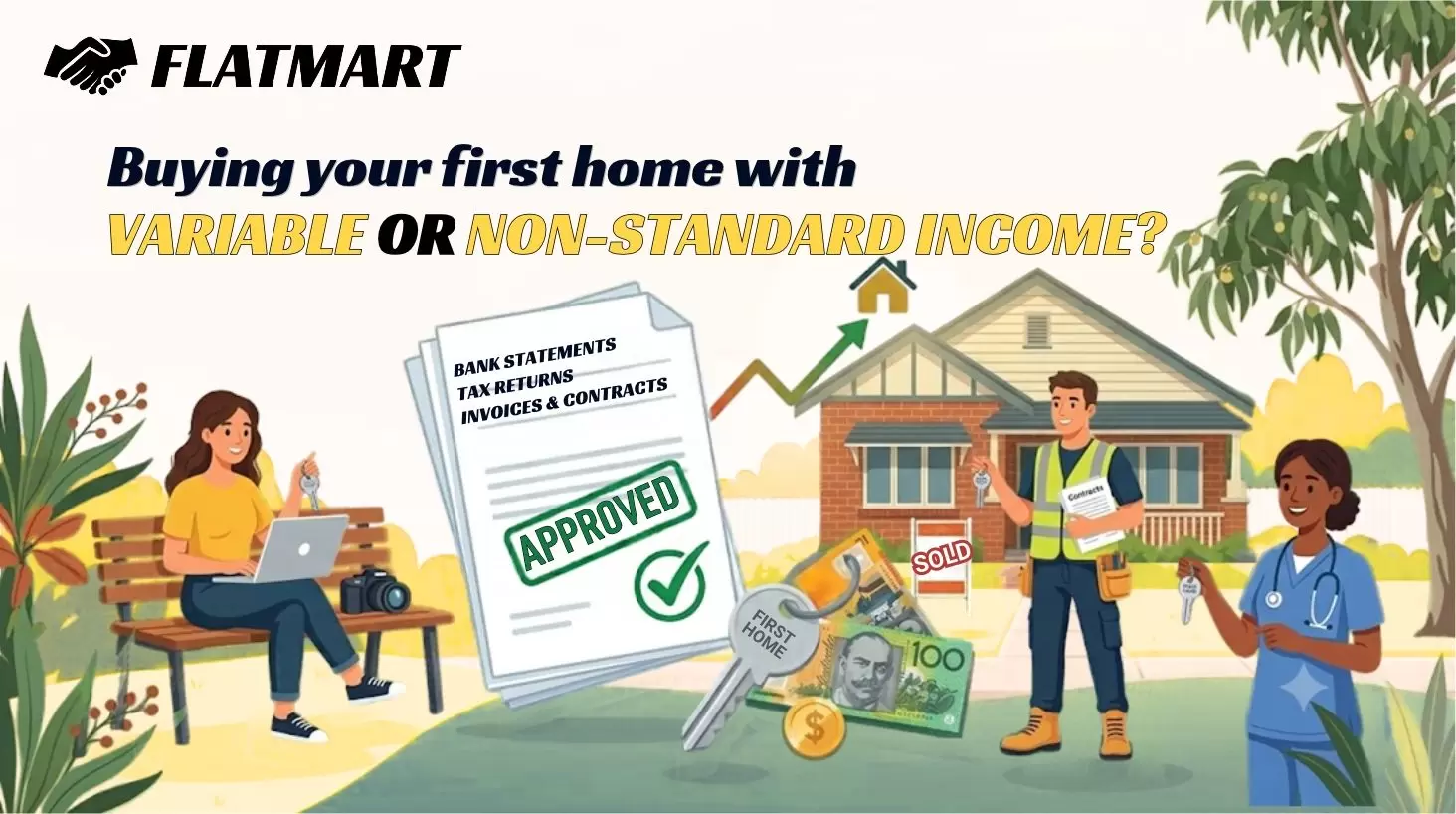
You don't need a fixed salary to buy your first home. Lenders do assess variable income differently, though, so preparation matters more. Here is what lenders look for and how to put your best application forward.
What counts as non-standard income?
Many first home buyers don't fit the standard "full-time, same pay every fortnight" picture. Common examples include:
- Casual or part-time work with changing hours
- Self-employed people and sole traders with an ABN
- Contractors and freelancers
- Income that relies on overtime, shift allowances, commission or bonuses
- More than one job, or a recent job change
How lenders look at variable income
Lenders want to know your income is stable and likely to continue. Each lender has its own policy, but these are the usual questions:
- How long have you earned it? Casual workers usually need a period in the same role or industry. For self-employed borrowers, requirements vary. Some lenders may request one or two years of financial information, such as tax returns and notices of assessment, while others may consider a shorter trading history or alternative supporting documents.
- Is it regular? Overtime, commission and bonuses may be averaged over time, and some lenders count only part of them.
- Can you prove it? Payslips, tax returns, notices of assessment, BAS statements and bank statements all help.
Because policies differ so much, one lender might count noticeably more of your income than another. That can change how much you can borrow.
If you are self-employed
- Keep your tax returns and BAS lodged and up to date. Late returns are one of the most common reasons applications stall.
- Deductions may reduce your assessable income, which lenders use to work out how much you can borrow. However, some eligible expenses may be added back under the relevant lender's policy.
If you are a casual worker
- Try to stay with the same employer or industry before applying. Changing jobs just before you apply can make lenders cautious.
- Keep your payslips and bank statements so your income history is easy to show.
Five ways to strengthen your application
- Build genuine savings with regular deposits over time. It shows you can manage repayments.
- Reduce your credit card limits. Lenders count the full limit, even if the balance is zero.
- Avoid new debts such as car loans or buy-now-pay-later before you apply.
- Get your documents ready early. If you are self-employed, your broker can confirm what financial information your chosen lender needs.
- Consider seeking pre-approval before you begin house-hunting so you have an indication of your potential borrowing range. Pre-approval is conditional and remains subject to final assessment and approval.
Government support still applies
Variable income doesn't stop you from using first home buyer support. If you are eligible, you may still use the 5% Deposit Scheme, NSW stamp duty savings and the First Home Owner Grant (FHOG) for new homes. The lender still has to approve your loan, so your income evidence matters.
How a Flatmart adviser can help
This is where a broker makes a real difference. A Flatmart consultant knows which lenders are more flexible with casual, self-employed and commission income. We can match you to a lender whose policy suits how you earn, instead of you applying to one bank and hoping.
Ready to get started?
Book a chat with a Finance & Mortgage Broker at Flatmart today.
Last reviewed: October 2026
This article provides general information only and does not take into account your objectives, financial situation or needs. Lender policies change and are subject to credit approval.